

The delivery model

Buy delivered scope. Not a team to manage.

An AI Pod ships production software against a committed scope, priced in story points, in two-week cycles. You approve the estimate before work starts and watch points turn into shipped features every week.

  • A price agreed before work begins
  • One point of contact, no ceremony
  • Your IP, assigned on full payment
  • Kickoff in one to two weeks, with accepted work shipping in the first cycle

What you are buying

An AI Pod is how Koombea sells custom software development. Most development contracts sell you access to people. You pay for hours, you manage the team, and you carry the risk if the work takes longer than anyone guessed. An AI Pod inverts that. You buy a defined quantity of delivered scope at a price you agree upfront.

This works because AI runs across the whole lifecycle rather than sitting beside it as a helper. Scoping, specification, implementation, test generation, and deployment are all AI-First. That compresses delivery enough that we can commit to a price instead of billing you for the discovery.

  • You approve every estimate before work begins
  • Weekly reports show points consumed against items shipped
  • Scope changes go through a formal change order, priced before work starts
  • Every invoice states the points delivered and the balance remaining

One cycle, drawn

The two-week cycle

  1. Step 01

    Priority Sync

    A short call where you say what matters most. The planning that follows is ours to run, not yours to attend.

    20 to 30 minutes

  2. Step 02

    Spec

    Each item becomes a contract of inputs, outputs, and edge cases, estimated in story points.

    Hours, not days

  3. Step 03

    Build and gate

    Implementation runs AI-First. Generated tests and automated reviews gate every merge.

    Continuous

  4. Step 04

    Ship, review, accept

    Reviewed work deploys to production. At the end of the cycle you see it demonstrated and accept it, and the report shows what your points bought.

    Every week

Two ways to buy capacity

Fixed-Bid Project

A defined scope, a fixed price.

Best when you know what you want built. We break the work into a full Work Breakdown Structure, price it in story points, and deliver in phases. Phase 1 always gives you a complete end-to-end product loop, never a foundation stub.
Monthly Capacity Commitment

Standing capacity, drawn down as you go.

Best when the roadmap is still moving. You commit to a monthly point capacity across one or more delivery lanes and re-prioritize the queue in any Priority Sync. Capacity moves up or down as the roadmap does.

What a point measures

A point is our unit of delivered work, estimated on a 1, 2, 3, 5, 8 scale that weighs functional scope, integration complexity and testing needs. The steps are deliberately uneven: an 8 is not eight items of work, it is one item nobody should pretend to have sized precisely.

Every estimate is yours to approve before work begins, and every invoice states the points delivered against the balance remaining.

Each disc is drawn to the size of its own point value.

Twelve Pods, already priced

Most software work arrives in a shape someone has built before. We scoped the twelve shapes we deliver most often and published the point range for each one, so you can price the work before booking a call.

Three of them cost between 15 and 50 points and end in a costed Work Breakdown Structure you own. That is the cheapest way to find out what your real number is.

When an AI Pod is the wrong answer

If you have an internal engineering team, a backlog you already own, and you need capacity rather than an outcome, a Pod is the wrong shape. You want Staff Augmentation, where engineers embed in your team at an agreed hourly rate and you direct the work.

Questions worth asking

What exactly is a story point?
A point is our unit of delivered work. We estimate it on a 1, 2, 3, 5, 8 scale, weighing functional scope, integration complexity, and testing needs. You approve every estimate before work begins.
How do you commit to a price without padding it?
Scope is decomposed into estimated items before anyone commits, so the price reflects work we have actually sized. AI-First delivery is what makes the margin on that commitment viable.
What happens if an estimate turns out to be wrong?
On a fixed-bid project we absorb it. That is the point of a fixed bid. If you change the scope, that goes through a change request with cost and timeline impact quantified before you approve.
How do I know the AI did not just generate garbage?
Because we assume it might. Every item is specified in writing before anything is built, and the plan that proves it is written before the implementation plan, never after. AI implements against that contract, generated tests and automated reviews gate every merge, and an engineer reviews what passes. Quality is a gate, not a phase.
Who owns the code?
You do. All custom deliverables become your sole property upon full payment, including source code, designs, and documentation.
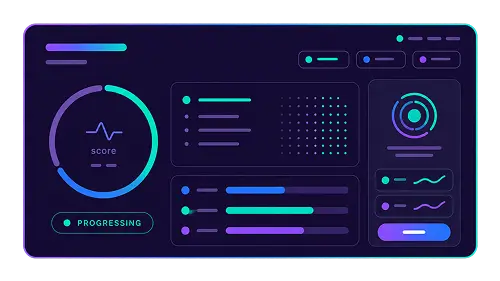
AI readiness assessment dashboard showing a readiness score
Not ready to talk yet?

Start with where you are today.

If a Priority Sync feels premature, take the AI readiness assessment instead. It scores where your business stands on AI and what to do next, with no call attached.

Bring us the backlog.

In 30 minutes, we will show you what a Pod would ship first and how we would price it.